
June 14, 2024
What EV Cell Manufacturers Need from Battery Copper Foil
EV cell programs need copper foil that supports energy density, fast charging, safety, manufacturing yield, warranty targets, and cell format flexibility.
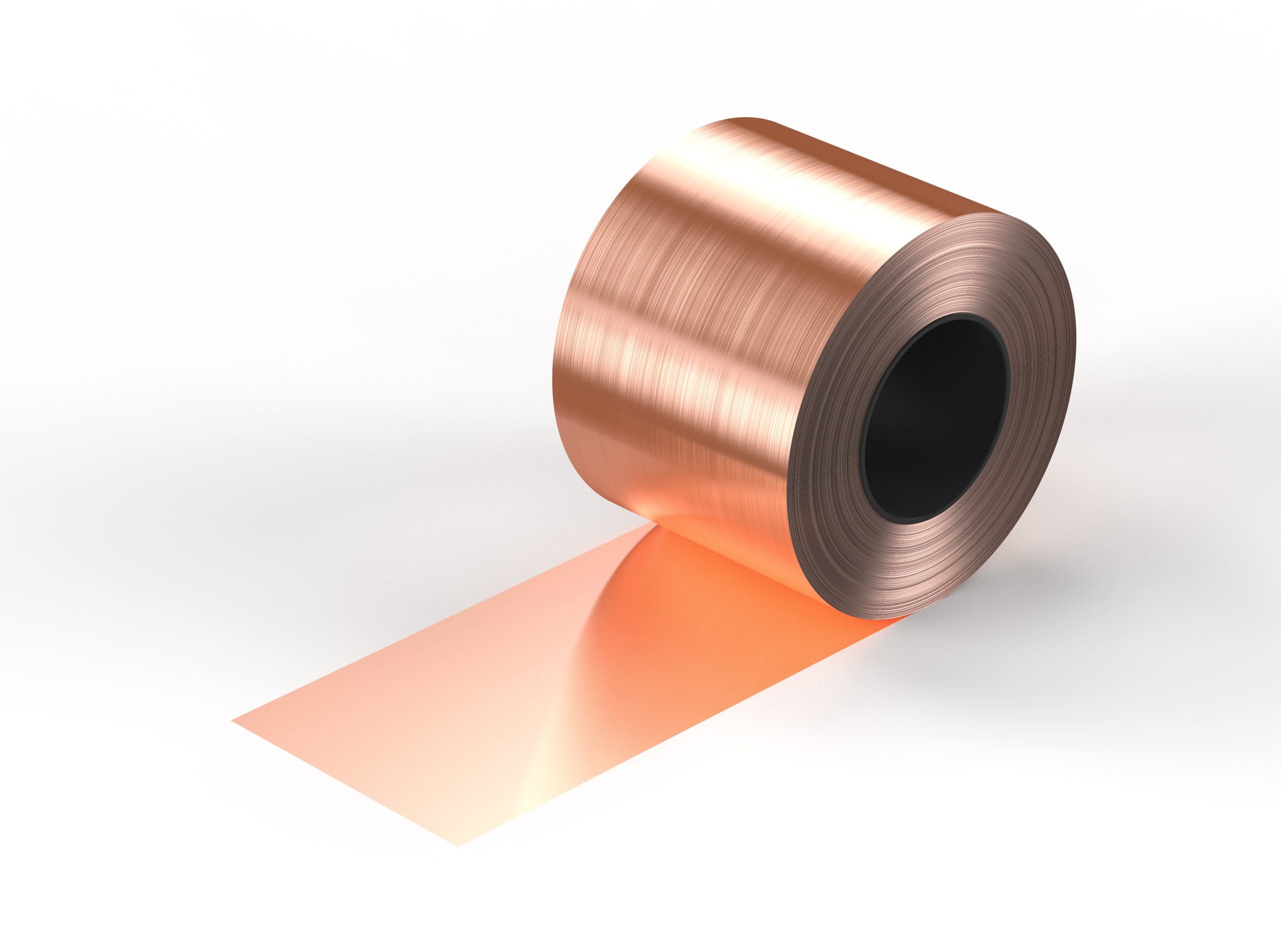
EV battery programs turn vehicle-level demands into material-level requirements. Drivers and OEMs care about range, charging time, safety, lifetime, and price. Cell manufacturers translate those goals into energy density, internal resistance, fast-charge behavior, cycle life, process yield, and cost per kWh.
Battery copper foil sits inside that translation. As the anode current collector, it has to conduct current, support the coating, survive electrode manufacturing, and remain stable through cell operation. It does not determine EV performance alone, but it can either support or limit the cell design.
The Buyer Problem: EV Cells Need More From Every Layer
EV cells are under constant pressure to improve. Higher range pushes energy density. Faster charging increases stress at the electrode interface. Automotive safety requirements raise the cost of defects. Warranty expectations make cycle life and consistency important. Cost pressure forces every material to justify itself in production economics.
For copper foil, this means a supplier has to address multiple priorities at once. The foil should be thin enough to reduce inactive mass, strong enough to run through production, ductile enough to handle stress, clean enough to reduce defect risk, and consistent enough to support qualification and scale-up.
The strongest EV copper foil is not defined by one metric. It is defined by the balance of thickness, tensile strength, elongation, surface morphology, cleanliness, edge quality, roll format, and documentation.
Energy Density And Inactive Mass
Copper foil is necessary, but it is inactive mass. Reducing foil thickness can help increase active-material share in the cell. This is why ultra-thin battery copper foil is attractive for EV programs.
The challenge is manufacturability. Thin foil must still handle coating tension, drying heat, calendering pressure, slitting, winding, and assembly. If it wrinkles or breaks, the energy-density gain can be lost through scrap and downtime.
Xenith positions its battery copper foil range at 3.5-12 µm and publishes specifications for gauges from 4-12 µm. The specification table includes areal weight, tensile categories, elongation, thickness tolerance, and surface data. For EV cell engineers, these values support the first stage of foil selection and comparison.
Fast Charging And Interface Stability
Fast charging increases the importance of low-resistance current paths and stable electrode interfaces. Copper is a highly conductive current collector, but the full electrode path depends on contact between the anode coating and the foil surface.
Surface morphology, wettability, adhesion, cleanliness, and oxidation control can influence how consistently the coating bonds and maintains contact. A uniform surface helps support uniform current distribution. A stable interface can reduce the risk of contact loss or localized resistance growth during repeated high-rate use.
This does not mean copper foil alone enables fast charging. Cell chemistry, anode design, separator, electrolyte, thermal management, and controls all matter. The correct copper foil message is narrower and more credible: controlled current collector properties can support high-rate electrode designs by reducing avoidable interface and defect variation.
Safety And Defect Discipline
EV safety puts pressure on every material supplier. Copper foil defects such as metallic particles, burrs, pinholes, oxidation spots, scratches, creases, stains, or copper dust can become electrode manufacturing risks. Some will be caught as scrap. Others may require investigation later.
Xenith’s appearance requirements call for smooth and flat foil, uniform color, no oxidation, spots, corrosion, or oil stains, and neat edges with no burrs or copper dust. The company also presents in-house inspection equipment including microscopy, surface roughness testing, spectrometer support, and tensile testing.
For EV cell manufacturers, this matters because defect discipline supports safety-critical production. Clean foil does not guarantee safe cells by itself, but it helps reduce avoidable material-layer risks before they reach cell assembly.
Manufacturing Yield And Cost Per kWh
EV battery cost is not only purchase price. A foil that causes web breaks, wrinkles, coating defects, or repeated process adjustments can increase cost per good cell. A foil that runs consistently can support yield and uptime.
This is why EV cell teams should evaluate roll behavior in coating, drying, calendering, slitting, and winding. Tensile strength and elongation are especially important when moving to thinner gauges. Xenith’s product page highlights high-strength BCF above 600 MPa and elongation above 15%, while the specification table gives tensile and elongation values by listed gauge.
Roll format also contributes to yield economics. Xenith states widths up to 1550 mm and roll lengths from 20,000-30,000 m, with slitting available for customer requirements. These details can support high-volume manufacturing when winding quality and edge control are confirmed in qualification.
Cycle Life And Warranty Risk
EV warranties make long-term consistency important. The copper foil interface can influence electrode durability because the anode coating must remain electrically connected and mechanically supported through repeated charge-discharge cycles.
Adhesion, surface stability, ductility, and corrosion or oxidation control can all matter. For anodes that include higher-expansion materials, current collector mechanical resilience becomes more important. A foil with better strength and elongation balance may help the electrode tolerate production and cycling stresses, although cell-level validation is still required.
Cell manufacturers should therefore include adhesion, resistance, and cycling observations in qualification when the program demands it. The supplier’s specification is the starting point; the buyer’s cell data is the proof.
Format Flexibility
EV platforms use cylindrical, prismatic, pouch, and evolving large-format designs. Each format stresses copper foil differently. Cylindrical winding may put more emphasis on elongation and edge quality. Pouch and prismatic stacking may emphasize flatness, dimensional stability, and coating uniformity. Large-format electrodes may increase the importance of width, thickness uniformity, and web handling.
The best supplier conversation begins with the cell format and process route. A copper foil grade should be matched to the customer’s equipment and design, not selected from a generic list.
The Practical Message
EV cell manufacturers need copper foil that supports range, fast charging, safety, cost, cycle life, and production scale. That requires more than conductivity. It requires a balanced material profile: ultra-thin options, mechanical integrity, controlled surfaces, clean edges, roll consistency, and supplier documentation.
Xenith’s public proof points align with this need: 3.5-12 µm BCF, high-strength and high-elongation options, wide and long rolls, published specifications, inspection capability, and an experienced battery foil team. Customer qualification should then verify the foil against the EV program’s actual coating line, cell format, and performance targets.
Ready to evaluate BCF for your battery line?
Review Xenith’s copper foil specifications or share your target thickness, roll format, application, and sample requirements with our team.